EN


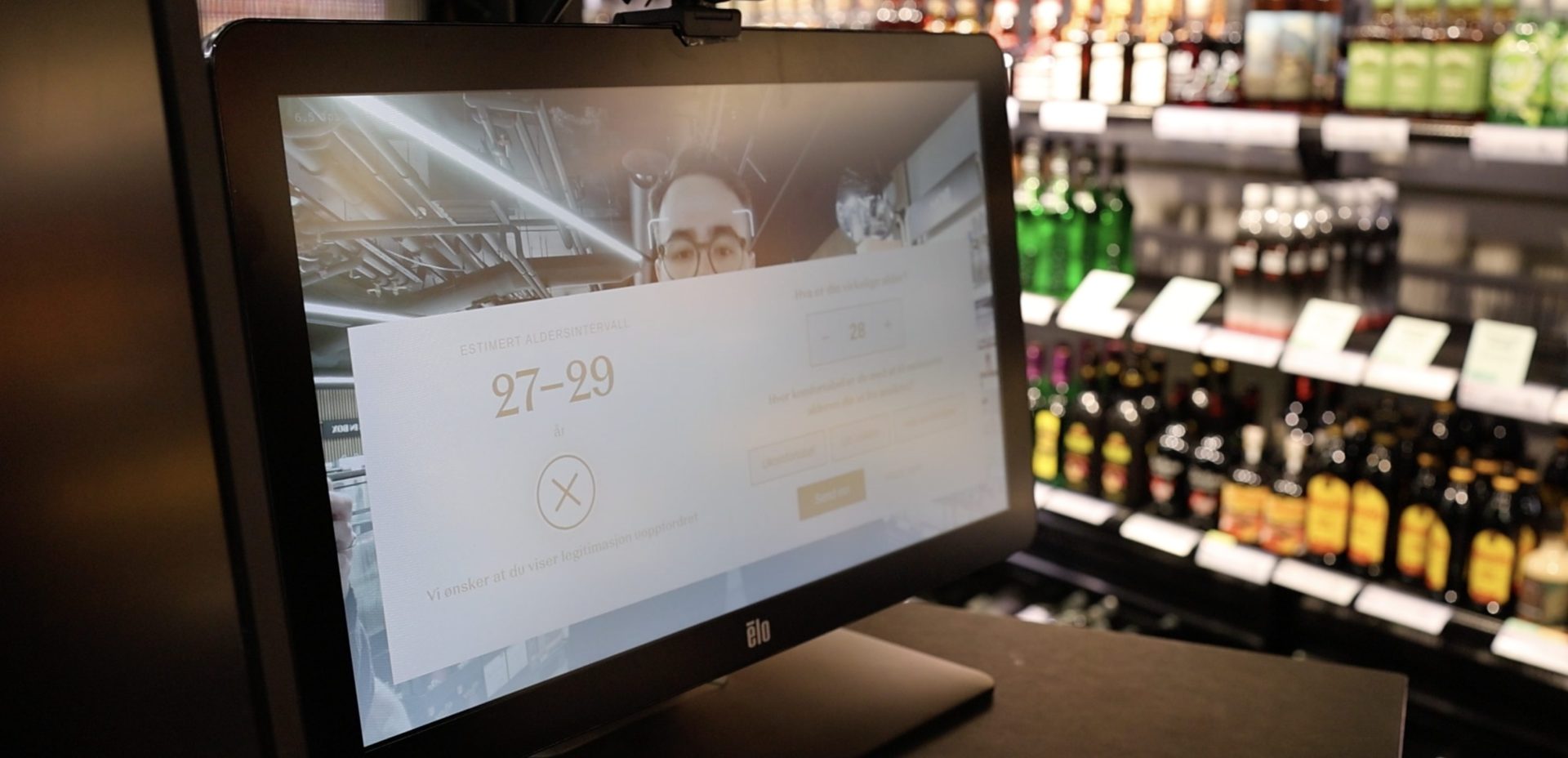
Customers visiting Vinmonopolet’s Oslo City store this summer may notice something unusual: a small kiosk inviting them to scan their face and see how old the system thinks they are.
The setup is part of a pilot project exploring whether AI could support age verification in alcohol retail. Developed by Smart Eye subsidiary Sightic in collaboration with retail technology provider StrongPoint, the system estimates how old a customer appears to be and displays the result as an age range.
At Vinmonopolet, Norway’s state-owned alcohol retailer, employees already ask for identification from anyone who appears to be under 25. The pilot is meant to test whether AI can support that existing approach.
“Vinmonopolet takes responsible sales very seriously,” says Karl Olav Bø, Regionleder at Vinmonopolet AS. “We already deliver very good results, with 97% accuracy through our internal controls, but we always strive towards 100%.”
The pilot is taking place at Oslo City, one of Vinmonopolet’s busiest locations, where customers span virtually every age group. Participants are invited to scan their face and then enter their actual age, making it possible to compare the system’s estimate against real-world data.
Watch the video to see the age estimation pilot in use at Vinmonopolet’s Oslo City store.
More than 1,000 scans have been completed since testing began. During the first month of the pilot, no customers under the age of 25 were automatically approved, while almost all customers over 40 were cleared without requiring a manual ID check.
The pilot also includes a customer survey. Among respondents so far, 79 percent said they were either comfortable with the technology or open to using it.
“The project gives us an opportunity to understand both how the technology performs and how customers respond to it in practice,” says Axel Jönsson, Business Development Manager at Sightic Analytics. “When you’re introducing technology that involves a camera, it’s important to be clear about how personal data is handled. With this system, no images or video of the individual are stored.”
The system is designed to support, not replace, existing age verification procedures. Customers who appear younger would still be directed to a standard ID check, while those estimated to be well above the age threshold could proceed without additional staff intervention.
“We will never get rid of the in-person age verifications,” Karl Olav Bø says. “But this can be a support tool in our daily work to ensure the highest possible accuracy in age verification.”
For employees at the store, the project also offers a chance to explore how emerging technologies might fit into everyday retail operations.
“We think this is very positive,” says Camilla Johannesen, Nestleder at Vinmonopolet AS. “We can use it as a nice tool in our work to ensure responsible age verification. It’s also fun to be at the forefront of new technology and try new things.”
The pilot is expected to continue through October, after which the full results will be evaluated.