EN


Written by
Stefanie Najafi
Too often, workplace screening is discussed in absolutes. Either employers are doing what is necessary to prevent harm, or employees are being subjected to surveillance in the name of safety.
To me, that framing is too simple.
In safety-critical industries, employers have a clear responsibility to protect employees, customers, and the public. At the same time, employees are right to ask what information is being collected, why it is needed, who can access it, and how it will be used.
Those concerns do not cancel each other out. New screening technologies can simply make the tension between them harder to ignore.
The more useful question is not whether safety measures are good and surveillance is bad. It is where the line between the two is drawn, and what makes people trust that it has been drawn in the right place.
Most safety measures ask people to give something up.
A medical examination asks for access to personal information. A background check asks someone to make part of their history available for scrutiny. Alcohol testing asks them to prove, in a specific moment, that they are fit to work safely.
In the right context, people often accept measures like these. Not because they are inherently comfortable, but because their purpose is understood and the intrusion feels justified by the risk it is meant to address.
But that acceptance isn’t automatic. The same measure can feel reasonable in one setting and excessive in another. A check introduced for a clear safety purpose, with well-defined limits and transparent communication, is likely to be received very differently from one imposed without explanation or obvious boundaries.
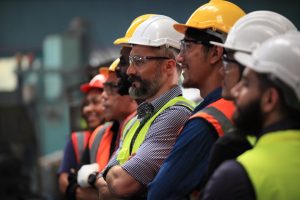
These differences are not determined by the technology alone. The same tool can be used in very different ways.
A narrowly defined check for a specific safety risk is not the same as continuous monitoring throughout the working day. Nor is collecting only the information needed to answer a safety question the same as gathering as much data as possible simply because the technology allows it.
In short, purpose matters. So do frequency, scope, and what happens to the information afterward. A tool introduced for a clearly defined safety purpose can become something very different if its use gradually expands beyond that purpose.
The line between screening and surveillance is therefore shaped as much by the choices surrounding the technology as by the technology itself.
The higher the consequences of a mistake, the more extensive the safety measures people tend to consider reasonable.
Aviation, transportation, mining, and heavy industry are obvious examples. In these environments, a moment of impairment or inattention can put not only one person at risk, but colleagues, passengers, or members of the public. The expectations placed on both employers and employees are therefore different from those in a low-risk office environment.
That does not mean every safety measure is justified simply because the work is dangerous. But it does mean that the level of risk has to be part of the equation.
A screening approach should be proportionate to the harm it is intended to prevent. The greater the potential consequences, the stronger the case may be for intervention. But the opposite is also true: introducing intensive screening where the risk does not justify it is unlikely to feel reasonable, no matter how capable the technology is.
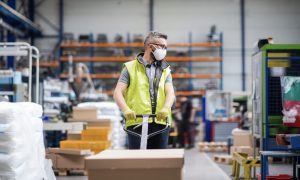
Even a proportionate safety measure can fail if the people subject to it do not trust how it will be used.
Technical performance is only one part of that trust. Employees also need to understand the rules around the system: what it assesses, what happens after a result is generated, who can act on that information, and where the process ends.
That last point is important. Screening should not be treated as an automatic judgment about the individual. A well-designed screening system should answer a narrow question, collect only the information needed to answer it, and lead to a clearly defined next step.
This is where transparency has to become practical. It is not enough to describe a system as safe, accurate, or privacy-conscious. People need a clear picture of what using it actually means for them. What happens if someone is flagged? Is there a second step before any decision is made? Is information retained, and if so, for how long and for what reason?
Clear answers to those questions help turn an abstract promise of responsible use into something employees can evaluate for themselves. They also make the boundaries of the system visible: not only what it is designed to do, but what it will not be used for.
New screening technologies are making it possible to identify risks that were previously difficult to detect. In safety-critical workplaces, that can make a real difference.
But trust cannot be treated as something to solve after the system is already in place.
When people understand why a measure exists, what it does, and where its boundaries are, they can make an informed judgment about it. When those things are unclear, even a useful technology can become difficult to accept.
This is something we will have to pay more attention to as screening technologies continue to develop. As the tools become more capable, clarity about what is being measured, why, and what happens with the result only becomes more important.
For me, the future of workplace screening will not be determined only by how accurate the technology becomes. It will also be determined by whether we design and use it in a way that people can understand, challenge, and ultimately trust.
Stefanie Najafi is a co-founder of Sightic, part of Smart Eye. With a background in law enforcement and the Swedish Security Service (SÄPO), she has firsthand experience of the risks and consequences of alcohol- and drug-related impairment. She later co-founded Sightic to develop AI-based impairment detection for automotive and other safety-critical environments.